
Sometimes our minds are blown because a movie we were certain would be the most talked about for at least the next three-and-half years didn’t get talked about at all, or there’s the inevitable Oscar dis that sends us reeling. Meanwhile, we look at the beyond terrible terribleness that has everyone running to the box office in droves and face-palm a few times until we get over it. (I could name several of the former, but I’ll save it for now.)
But there are also those movies that are so good and who cares whether my fellow film-loving peeps are into them or not because it’s actually the Academy Award for Best Supporting Whoever that didn’t happen that leaves me asking “what they hey?” And maybe Oscar talk is a bit over the top, but there are three talented ladies in three great films that received little to no praise, so let’s change that and start talking.
Leighton Meester in Country Strong


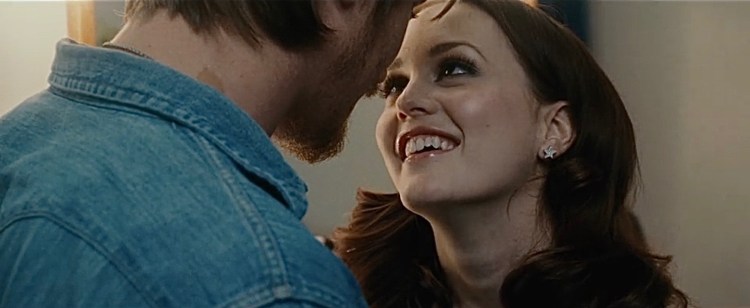
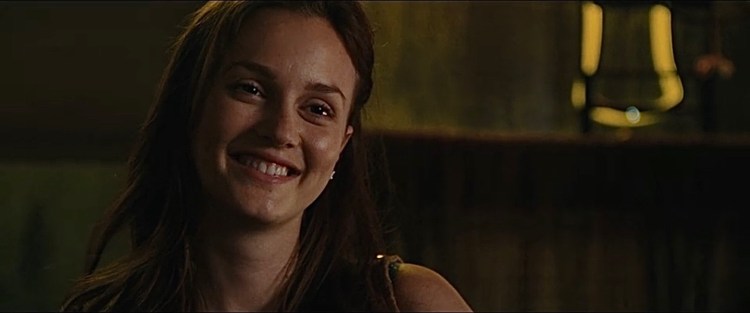
“As a woman in this industry, people have a habit of thinking I’m some kind of ignoramus. And my pageant training doesn’t exactly help things, so I have to overcompensate. You’re not the only one who thinks I’m just some dumb beauty queen.”
Chiles Stanton
I don’t know how Hollywood picks and chooses who takes center stage and who barely exceeds beyond a few noteworthy roles, but sometimes I’m baffled by who reaches red carpet stardom and, more often, who doesn’t. Leighton Meester, for instance, struck gold in 2007 when she landed the role of leading lady, Blair Waldorf, in the delicious teen soapbox escapade, Gossip Girl, alongside Blake Lively (Savages, A Simple Favor) and Penn Badgley (The Stepfather, You), but maybe it was more of a bronzed deal. There’s no question as to whether Meester was the perfect fit for the overindulged mischief-maker with too many redeeming qualities to dislike, and you’ll be hard-pressed to find someone who will say there might have been a better Blair Waldorf out there, but has Meester not gotten the recognition she deserves due to type-casting and too few opportunities to show she’s got the acting chops for more diverse roles?
Leighton’s leading roles in Monte Carlo and The Roommate were good, but they didn’t quite allow her to separate herself from Blair. (And they weren’t exactly box-office hits, so that’s unhelpful.) Not only were both roles too much like the Gossip Girl protagonist that Meester was already notorious for, but nor were they challenging enough to wow Hollywood bigwigs into pursuing her as the next Bond girl or something like it.
So what happened? In 2010, Meester shined as bright as the Dog Star as Chiles Stanton in Country Strong, portraying a beauty queen proving her worth as a singer while on tour with an emotionally troubled country queen named Kelly Canter (Gwyneth Paltrow), who’s fresh out of rehab and pressured into a hurried comeback. Chiles is handpicked by Kelly’s husband and manager, James (Tim McGraw), to perform as the opening act with Kelly’s friend/sponsor/not-so-secret lover, Beau (Garrett Hedlund), whom Chiles has a history with, as well as a wide-open agreement that they don’t like each other.
Granted, Chiles Stanton isn’t the biggest stretch from Blair Waldorf, but the stretch is big enough. Capturing Chiles’s essence in itself makes a solid case that Meester can conquer a softer, less snarky version of a prima donna than Blair, and with a sympathetic yearning that Blair didn’t garner from viewers because she had the gift of too much courage and over-the-top determination that either resulted in gloats that were too predictable to appreciate beyond a superficial attachment or pouts that didn’t exactly tug at the heartstrings. Chiles is determined but could do with more courage, and she has a childlike excitement that endears us and a sorrowed disappointment (when defeated) that we just don’t find fair because gosh-darn-it we love her.
The tone of Chiles’s ambition is affectionate. She’s high maintenance and rigid, but these less-than-desirable qualities come from nerves and insecurity, not entitlement. The desperation in her eyes, the uncertain pining in her voice, and the burning hope she exudes are why we root for her. But what really gets us is seeing how well Meester brings Chiles Stanton’s true desires into question while sifting through the turbulence of rising to fame, falling in love, and thinking she can have it all.
Seeing Leighton Meester in Country Strong is advantageous if you don’t appreciate her full potential but want to – and even if you don’t want to. With other killer performances by Gwyneth Paltrow, Tim McGraw, and Garrett Hedlund, a soundtrack by Michael Brook (Mission: Impossible 2, The Perks of Being a Wallflower) that you don’t have to be a lover of country music to give credit to, and a screenplay by Shane Feste (The Greatest, Endless Love) that expertly builds each fateful moment and climax, you have an impressive production that happens to be streaming on Netflix. FYI.
Note: Also catch Leighton Meester as Carla Powell in The Judge (2014) with Robert Downey Jr. and Vera Farmiga. You’ll thank me.
Elle Fanning in Live by Night
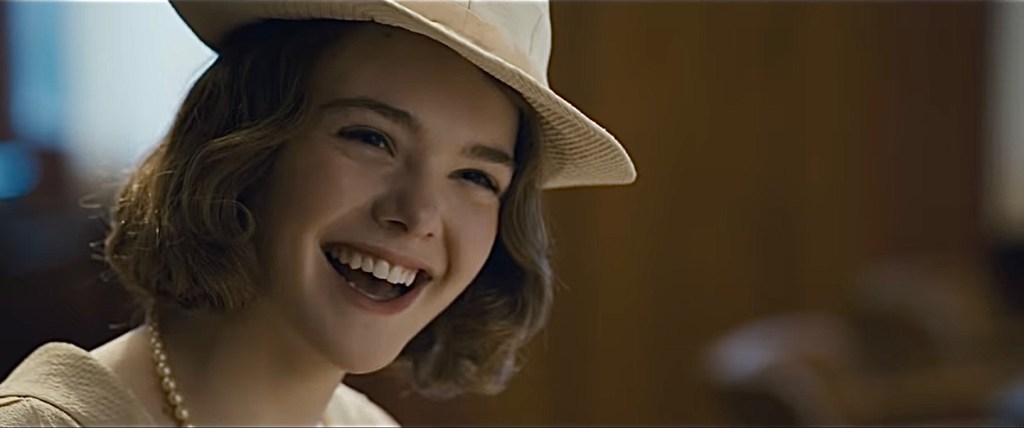
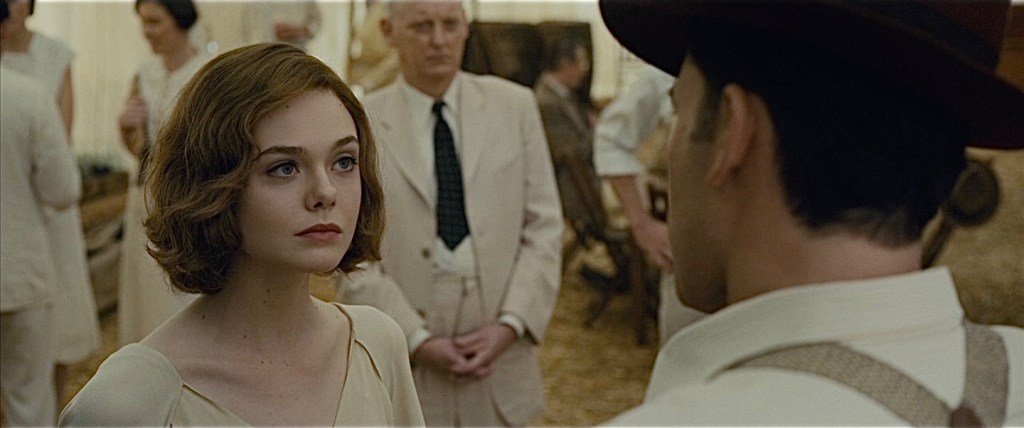
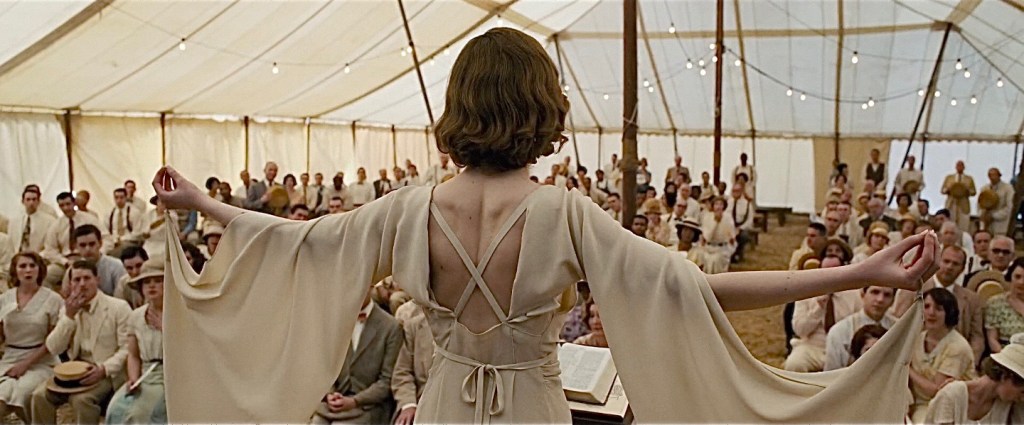

“I don’t know if there is a God. But I hope there is. And I hope he’s kind. Wouldn’t that be swell?”
Loretta Figgis
Elle Fanning doesn’t need a breakout role, nor does she need a random blogger here begging people to pay attention to her. She’s got this. But I’m still irked that nobody remembers her as Loretta Figgis, the girl who got lost on her way to Hollywood and turned to God in her quest for redemption. The Prohibition-era crime-drama, Live by Night, based on the novel by Dennis Lehane, about a World War 1 veteran (played by Ben Affleck, who also wrote, directed, and co-produced with Leonardo Di Caprio) trying to make it as a ruthless gangster despite his morality getting in the way, was a box office bomb in 2016 due to mixed reviews and a crowded theater release, but that’s no excuse for Elle Fanning bombing with it. She was Loretta Figgis!
When Loretta arrived home after getting sidetracked by drugs and prostitution and opened her mouth as the new and completely unimproved bible thumper on a mission to rid the world of sin, I wanted to smack her into the next scene, where hopefully Ben & the Boys would do what gangsters do and get her out of their way. After all, her pulpit represented a very real problem for their business venture in casino dealings, and don’t crime bosses remove such obstacles without having to step back and give it a think?
Well, no, not if the problem is Elle Fanning. Not only did Affleck’s Joe Coughlin sit down for a heart to heart with Little Bo Peep and turn her into a human being that didn’t just preach nonsense in a tent and give clichéd responses when Joe tried to reason with her, but he had to go the extra mile and make it abundantly clear that he liked her. And dammit if we didn’t like her now too.
God doesn’t save Loretta from the internal torture that she tries to bury by preaching his word and pissing off gangsters. Nor does God save her from said gangsters. No, it’s Joe who does the latter, despite knowing it will cost him and his associates everything they’ve worked for and had within reach – until Loretta showed up and single-handedly wiped their deal clean. Despite coaxing from his partner in crime, Dion Bartolo (Chris Messina), and the likelihood of a brutal backlash from his boss, Italian Mafia gangster Maso Pescatore (Remo Girone), Joe can’t summon the cruelty to call for Loretta’s head. His decision unleashes hell around him and everything he holds dear.
In what might have been her most compelling role yet, Fanning made legitimate A-Listers Sienna Miller (Alfie, The Loudest Voice) and Zoe Saldana (Star Trek, Avatar) practically disappear, and with barely half the screen time. However small her role, its importance was apparent considering Loretta’s effect on the main enterprise, and Fanning’s enthralling performance ensures that Loretta’s importance isn’t questioned. But while Joe was powerful enough to save Loretta from his dangerous friends and foes, is he powerful enough to save her from her inner turmoil? Her newfound faith in God is a transient fix that doesn’t remove the anguish she carries. Exuding an overwhelming sadness that she manifests rather than hides with her sanctimonious grievances, Elle Fanning illustrates the crippled thrust from which it’s not always possible to heal.
The movie bombed at the box office, sure; but that just means too many people missed out. Live by Night is worth the 129 minutes. I wouldn’t lie to you.
Lisa Kudrow in The Other Woman
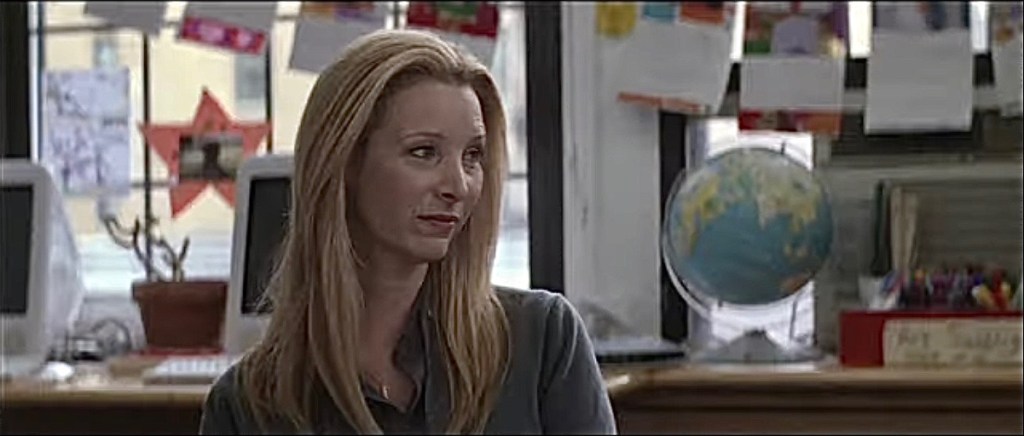
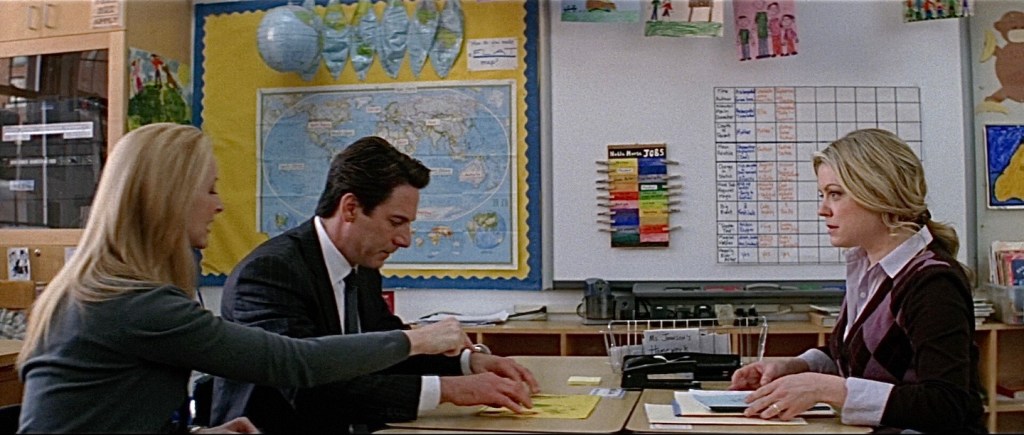
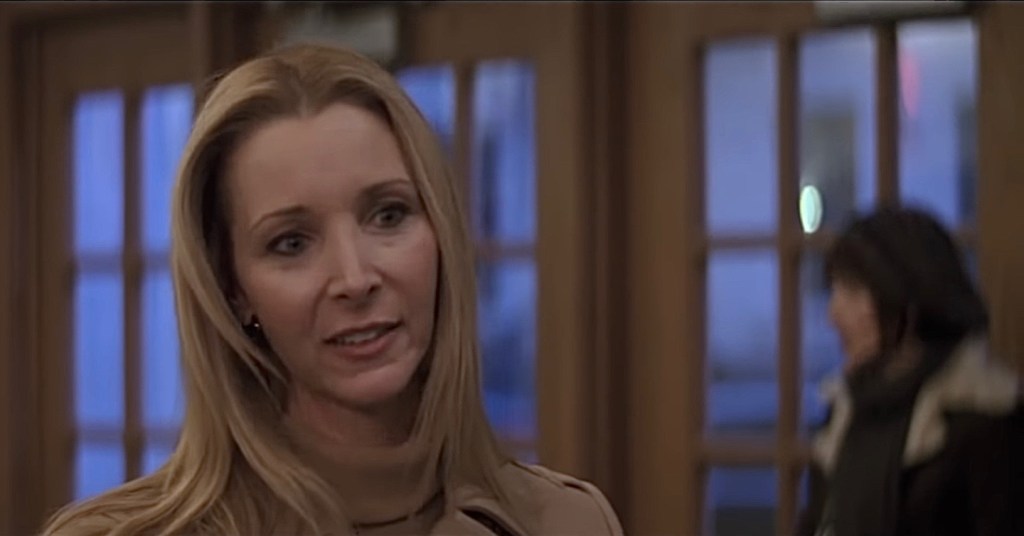
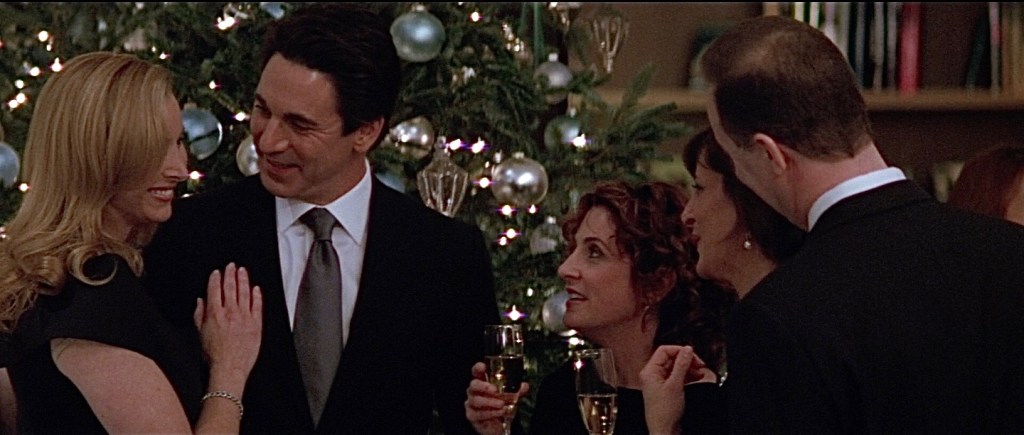
“I need to know that you understand what I’m saying, so I’m going to repeat this until you say that you understand. You didn’t kill your child, Emilia. You didn’t kill your baby. Your baby died… because babies do, sometimes. They just slip away for no reason.”
Carolyn Soule
It’s very, very difficult to outshine Natalie Portman. She is, after all, completely and absolutely 100% unoutshineable. She is and always will be the hypnotic beauty that leads the way with her perfect everything and ain’t nobody taking that away from her.
So Lisa Kudrow doesn’t do that.
With that out of the way, Kudrow was a phenomenal presence as Portman’s loathsome rival in The Other Woman, a 2009 drama based on Ayelet Waldman’s novel, Love and Other Impossible Pursuits, which I’d never heard of until now, but I’m sure it’s good.
Lisa Kudrow plays Carolyn, a prominent obstetrician in New York whose husband, Jack (Scott Cohen), a partner at one of the city’s top law firms, leaves her for a younger woman named Emilia (Portman). Emilia, a junior associate at Jack’s firm, doesn’t go on a mission to have an affair with Carolyn’s husband, but she doesn’t try to avoid it, either. Despite her transgression, she’s initially presented as a misunderstood martyr who gets pregnant and too quickly marries a man with more baggage than she’s prepared for, so their newlywed bliss is short-lived because his baggage isn’t courteous enough to disappear for a while.
Carolyn’s controlling temperament and inability to treat Emilia like a capable adult complicates their lives due to Jack’s passive disposition in dealing with his ex-wife. And hard as she doesn’t try, Emilia can never please Carolyn. And then there’s Jack and Carolyn’s son, William (Charles Tahan), whose limited social skills endlessly cause him to say all the wrong things, which Emilia reacts to by erupting. In Emilia’s defense, the sensitive issues are William’s favorite, the most notable being her and Jack’s baby, Isabel, who died from SIDS when she was three days old, so anyone in Emilia’s position would have difficulty remaining levelheaded. Then again, William is eight years old and doesn’t fully comprehend her frustration. And of course Carolyn always learns everything Emilia says and does, if not from William, then from Jack, who’s always confiding in Carolyn despite her aversion to his existence.
(Perhaps it’s guilt. Or perhaps he respects that they’re bonded because she’s William’s mother.)
Normally, 15 minutes of screen time doesn’t give anyone a fair chance to pull off a convincing and memorable performance, but Kudrow dominates. In fewer than a handful of not-that-lengthy scenes, she excels at stepping into the shoes of a betrayed wife and embodying every ounce of hurt, anger, frustration, and hindered rage that she can muster. While her character, Carolyn, never bottles up her hatred, the darkest parts of her animosity are withheld as she noticeably struggles to keep herself (somewhat) composed. And most viewers detest Carolyn, but the problem with Carolyn is the setup of the story she’s in. We’re supposed to detest Carolyn. Emilia is the heroine, the one that viewers are led to sympathize with, while Carolyn is our very own version of the wicked witch that the house missed in the fall.
But it doesn’t matter if Carolyn is Mother Teresa or the devil incarnate. What matters is how Kudrow brought her to life and never made us question her validity. She’s the resentful ex-wife who makes no attempt to dance around her hostility. Kudrow’s depiction of Carolyn is so credible that it never even occurs to us to empathize with her.
We fail to consider why Carolyn is so spiteful. We fail to see her objectively. And yes, it’s difficult to see her objectively when nearly every second of her screen time is spent tearing into Emilia or lashing out at Jack because of Emilia. Carolyn thinks Emilia is reckless with William, but it’s not so much her objection to Emilia as it is her protective nature of her son that causes her outbursts. (But that’s not to say her objection doesn’t play its part.) Of course she’s going to react negatively when her son’s stepmother, whom she sees as untrustworthy and incompetent, keeps falling short when William is in her care.
But I still think our own opposition of Carolyn is a positive reflection of Lisa Kudrow’s performance. She’s as mad as any woman would be if her husband got another woman pregnant and left, but if you take a step back and picture her without Emilia in the world, Carolyn is actually quite likable.
 Certain Movies & Things